


When Cinema Reinforces a Brand’s Identity: The Case of Louis Vuitton
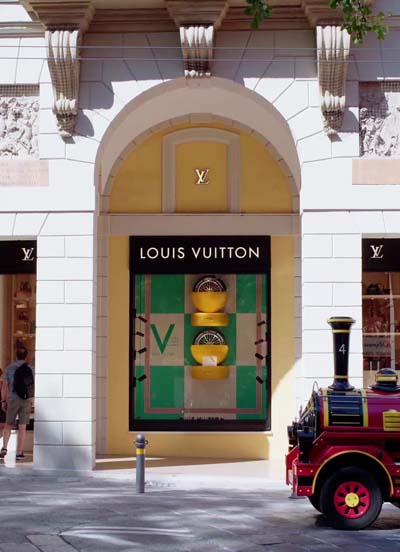
It’s called product placement, and it’s a marketing strategy that links the narrative of a film, music video, or TV show to the values of a brand. It’s a form of indirect promotion which, when placed in the context of a film, helps strengthen a brand’s image and expand its philosophy. Among the fashion houses present in Galleria Cavour, one brand that has made extensive use of this strategy is, without a doubt, Louis Vuitton.
Let’s take a closer look at the relationship the brand has had over time with the world of cinema, and discover, through iconic films, how the French house has benefited from this union. In The Darjeeling Limited, the maison enters the imaginative world of director Wes Anderson, known for the dreamy, carefully curated aesthetics of his films, marking the beginning of a high-profile artistic collaboration.
In the movie, the Whitman brothers, following the death of their father, embark on a train journey through India that proves to be pivotal in resolving their personal issues and confronting unresolved family matters. The luggage set used in the film is by Louis Vuitton and belongs to the Jungle collection designed by Marc Jacobs. The detail of the father’s initials stamped on every bag and trunk serves as a further symbol of the legacy of travel, a theme dear to the maison, and represents a valuable moral and personal inheritance.
In Titanic, product placement is entrusted to the unsinkable Molly Brown, who boards the ship with an impressive set of Louis Vuitton trunks. This is certainly no coincidence: the character, played by Kathy Bates, represents a powerful, self-made woman whose boldness makes her a disruptive presence among the first-class ladies. Those suitcases become a subtle yet powerful expression of her status, one that demands to be noticed.
In Mean Girls, the brand makes an appearance alongside the school’s queen bee: the infamous Regina George, both feared and imitated. The bag she proudly shows off in the school hallways is the Cherry Blossom Pochette, an accessory that reinforces the aspirational image of social power, both for the character and the brand itself. In Woody Allen’s masterpiece Blue Jasmine, a set of Louis Vuitton luggage plays a starring role in a memorable scene. Cate Blanchett, who won an Oscar for the role, plays a high-society woman forced to start over at the bottom. Despite being broke, she flatly refuses to sell her Vuitton luggage, citing trivial reasons like the presence of her initials on each item.
The brand’s allure becomes a metaphor for a social status the character refuses to let go of, because it defines her and reminds her of who she once was. Many more examples could be cited. What’s clear is that this promotional strategy proves highly effective, as it ensures visibility that lasts over time. Especially with films that have become iconic, audiences associate the product with characters or emotions experienced on screen, thereby increasing its perceived value.
Finally, the emulation effect is practically guaranteed, especially when the audience identifies with the character or the story.