


History of the raffia bag

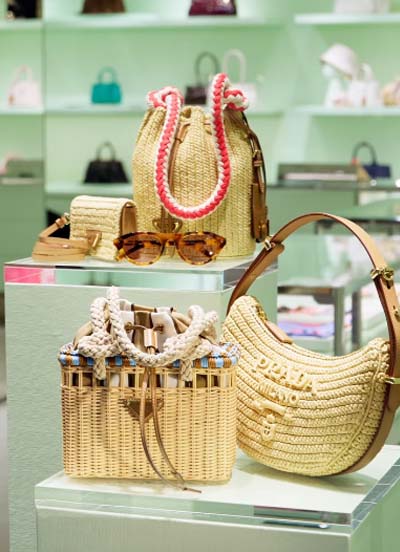
Raffia bags are a timeless summer classic, as demonstrated by the windows of the Galleria Cavour boutiques that are displaying them in all sorts of sizes and variations these weeks. Even before becoming an icon of summer-chic style and conquering the big stylists, raffia was used over the centuries to weave baskets, ropes and ritual clothes in central Africa.
Its origins, in fact, are very ancient: extracted from the leaves of raphia farinifera, a tropical palm tree from Madagascar which then spread to the rest of the continent and worked with manual techniques handed down from generation to generation. It was during the colonial period that this fibre began to circulate in Europe, conquering the public thanks to its unparalleled duality of lightness and strength.
In the 1950s and even more so in the 1960s, thanks to the economic boom and the growing demand for seaside tourism, raffia bags became a holiday must-have as they were practical, light and versatile. But it was in the 1970s, at the height of boho-chic fashion, that this accessory became synonymous with the style known as Riviera, interpreted with masterly ease by jet set icons such as Brigitte Bardot on the beaches of Saint Tropez or Jacqueline Kennedy in the alleyways of Capri.
With the advent of a greater sensitivity to environmental issues and the return to natural materials, raffia is currently experiencing a second moment of glory and in recent years has been re-proposed on the catwalk by brands of the calibre of Prada, Chanel, Loewe and Jacquemus, which enhance its qualities thanks to refined workmanship and precious details. In fact, raffia is completely biodegradable, regenerable and the result of careful and meticulous craftsmanship. Light, iconic, perennially chic whether paired with beachwear or worn with glamorous dresses, the raffia bag is not a simple accessory but a true symbol of summer, freedom, travel and sustainability.
A rare example capable of uniting the Global South with the international catwalks and a manifesto against the prevailing fast fashion as it is capable of representing a more conscious choice that throughout history has been able to unite cultures and values.