


Niccolò dell’Arca’s Compianto is one of Bologna’s treasures

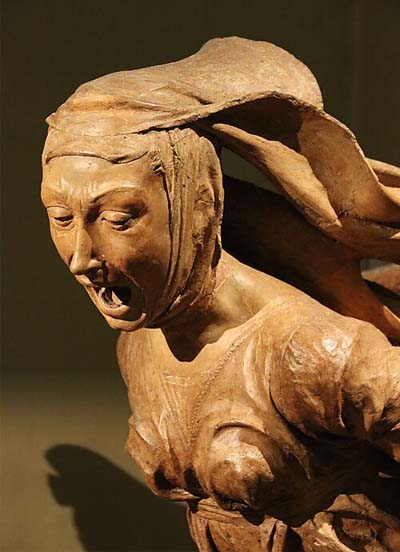
Ph: FrDr, CC BY-SA 4.0, da Wikimedia Commons
There is a work from the early Italian Renaissance that is kept in the heart of Bologna inside the church of Santa Maria della Vita, a few steps from Galleria Cavour, and which, despite the passage of time, continues to represent one of the most captivating, shocking and controversial masterpieces in the history of art: it is Niccolò dell’Arca’s Compianto over the Dead Christ.
This is a sculptural group created between 1463 and 1490, consisting of seven polychrome terracotta figures representing one of the most intense scenes of the Passion of Christ: next to the lifeless body of Jesus, the anguish and drama of the discovery by the Marys is consummated.
The representation is so intense that even the viewer is overwhelmed and involved in the episode described. Even today, the complex attracts numerous visitors fascinated by the fame of the work, which, even at the time of its creation, was able to introduce an artistic language that was radically new for its time. While Christ’s face appears serene, in stark contrast to the turmoil surrounding him, it is the expressions of pain on the faces of the Marys that capture the scene, with their cries, open mouths, wide eyes and contorted gestures.
The use of terracotta, considered a simple if not poor material, helps the Ark to make the surfaces vibrant and thus increase the realism of the scene, which is what has given the entire complex the fame that has followed it over the centuries. Seen in the context of the time, at the turn of the medieval obscurantism and the arrival of new awareness, the work pushes the faithful to a real emotional participation in Christ’s sacrifice and not simply to an act of passive devotion.
It anticipates everything that the Renaissance will bring with it, including the centrality of man within culture, in a return to classical roots that the medieval centuries had denied in favour of the total omnipotence of the divine figure. The fame of the Lamentation is such that it anticipates by centuries the mission of contemporary art, which is not to give consoling answers but to shake things up. Just like the provocative creations of Cattelan or Banksy, dell’Arca’s work places the viewer in the position of experiencing the torment narrated almost as if they were a direct witness to the event, sensitising them to the ancestral question of the passage of life between pain, hope and a sense of humanity. It is a Bolognese treasure that no tourist visiting the city should miss and a timeless work deeply linked to the city’s artistic identity.
Ph: FrDr, CC BY-SA 4.0, da Wikimedia Commons